States of Power Diplomacy Guide
Alliances, guarantees, volunteers, and betrayal — how diplomacy shapes wars in States of Power before armies move.
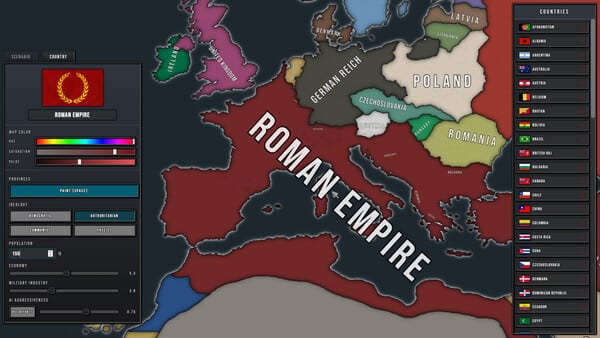
Why Diplomacy Comes First
States of Power is sold as a game of armies, factories, and maps, but many campaigns are decided in the diplomacy panel. Alliances, independence guarantees, non-aggression pacts, and “volunteers” let you shape who fights whom long before a division crosses a border. In multiplayer the same tools become weapons: global chat, private messages, and timed betrayals.
Treat diplomacy as a production line. Every pact you sign spends political capital you cannot spend twice. A guarantee that looks cheap on day one can drag you into a two-front war you cannot supply. A pact you refuse can isolate you when Germany or Italy starts looking for an easy neighbour.
This page sits beside the Getting Started walkthrough and the Multiplayer Guide. If you are practising in the free France demo, read Demo and France first — that scenario already encodes a diplomatic opening you can study with the clock running.
The Core Diplomatic Actions
The store page lists the toolkit clearly: form alliances, guarantee independence, sign non-aggression pacts, send volunteers to foreign wars, or quietly prepare for war. In practice you will cycle through these in a fixed order.
Alliances share the burden of a war. They are strongest when both partners can actually reach the front. An alliance with a distant industrial power is insurance; an alliance with a neighbour who has no army is a liability that paints a target on both of you.
Independence guarantees are the classic tripwire. France in the launch scenario starts with guarantees over Belgium and Luxembourg while sitting in a bloc with the United Kingdom, Poland, and Czechoslovakia. That is not flavour text — it is a lesson. Guarantees exist to deter an aggressor, but they only work if you can honour them. If your military supplies are empty, a guarantee is a bluff the AI will call.
Non-aggression pacts buy time. Use them when you need months of factory construction, not when you already plan to attack. Breaking a pact later is possible in player-versus-player games; in single-player it still costs you the trust of every other capital watching the map.
Volunteers let you bleed an enemy without a formal declaration. Send them only if you can spare the equipment. A volunteer corps that arrives without supply is a gift to the defender.
Declare War Before You March
A frequent first-session mistake is selecting attack on a province before a war exists. You must declare war, then move. The interface will not invent a casus belli for you. If you have no diplomatic justification, you can still declare — the cost is political, not mechanical — but neighbouring majors will notice.
Once war is active, combat in a province shows a victory-chance readout (the star with a percentage). That number is not flavour: it is the simulation telling you whether morale, numbers, and support are on your side. Diplomacy that pulls a third army onto the tile can swing that percentage without you building a single extra factory.
Scripted Politics and Real-Time Events
The world does not wait for your turn. Anschluss and similar historical beats fire on the clock while you are still recruiting in Burgundy. If you are chewing through Austria as France, the province can flip owner under your feet when Germany absorbs the rest of the country. That is diplomacy as geography: borders move because another capital signed a deal you were not in the room for.
Keep the game speed low whenever a major diplomatic event is due. Speed-up is excellent for factory queues; it is a good way to miss the week when your guarantee actually matters.
Multiplayer: Chat Is a Front
Online sessions include global and private messaging. The developer’s pitch is blunt: your words are weapons. Private channels are where you split loot, sell a guarantee, or agree who eats Romania. Global chat is theatre — useful for public guarantees, useless for planning a stab.
Never leave a private promise unhedged. If a partner needs your steel, send the trade before the attack, not after. If you plan to betray, time it to the moment their army is out of supply in the Supply Lines sense: a stabbed ally who still has ammunition will punish you harder than a stabbed ally who is already routed.
For session setup, player counts, and host quality, use the Multiplayer Guide. Diplomacy does not replace a stable host; it makes a stable host worth playing.
Opening Repertoire by Power
Majors should open with a map of tripwires. Germany wants quiet flanks while factories spin up. The United Kingdom wants continental partners who can actually hold a port. The United States can afford to wait, but waiting is not the same as ignoring Europe — trade and guarantees still move the world market you will later flood with goods. See Major Powers Strategy for the industrial half of those openings.
Minors live or die on one good pact. Finland, Romania, or Hungary cannot out-produce a neighbour; they can make that neighbour attack someone else first. The Minor Nations Guide covers the military improvisation. Diplomacy is how you buy the months that improvisation needs.
Ideology changes mid-campaign — peaceful reform over about two years, or a civil war that splits army and land. Either path rewrites your diplomatic colour on the map. Plan pacts around the ideology you will have after the split, not the one on the lobby screen. The Civil War and Ideologies page walks through the timing.
Diplomacy and the Economy
Trade on the world market is a diplomatic act wearing an economic hat. Buying military supplies with gold, as you can in a pinch, advertises that your factories are behind. Selling goods while guaranteeing a neighbour is how you fund the army you promised. Pair this page with the Economy Guide so you do not sign a war you cannot pay for.
Loans during peacetime can fund the factories that make a guarantee credible. Loans during a two-front war usually fund a collapse. If a partner offers you resources “for help,” read the fine print: help that arrives after your manpower is gone is not help.
A Practical Session Checklist
- Pause or drop speed. List every neighbour, guarantee, and existing alliance.
- Decide who you cannot fight this month. Pact or ignore them on purpose — do not drift.
- Build goods factories until you can honour a war economically, then military factories.
- Declare, then attack. Watch the victory-chance star before you commit a second army.
- In multiplayer, put the real plan in private chat and the deterrent in public chat.
Diplomacy will not save a hollow army, and an army will not save a country that guaranteed the wrong border. Run both systems, or lose both wars.
Frequently Asked Questions
Quick answers to the most common questions about States of Power.
Do I have to declare war before attacking a province?
Yes. Issue the diplomatic declaration first, then give attack orders. Selecting a hostile move on a country you are still at peace with will not start the war for you.
What does an independence guarantee actually do?
It is a tripwire: if the guaranteed nation is attacked, you are expected to honour the war. France’s launch setup (Belgium and Luxembourg guaranteed, allied with the UK and Poland) is the textbook example. Only guarantee what you can supply.
Are volunteers a substitute for joining a war?
They let you fight without a full declaration, but they still consume military supplies and manpower. Send them only if the [Economy Guide](/guides/economy-guide/) says you have surplus equipment.
How should I use chat in multiplayer diplomacy?
Keep operational plans in private messages. Use global chat for public guarantees and theatre. Assume every promise can be broken the moment supply lines snap.
Does changing ideology reset my pacts?
A civil war splits your country, army, and puppets. Plan diplomacy around the government you will have after the split. Details are on [Civil War and Ideologies](/guides/civil-war-and-ideologies/).